
Summary of the short story “The Fire of Zoroaster” by Houshang Golshiri
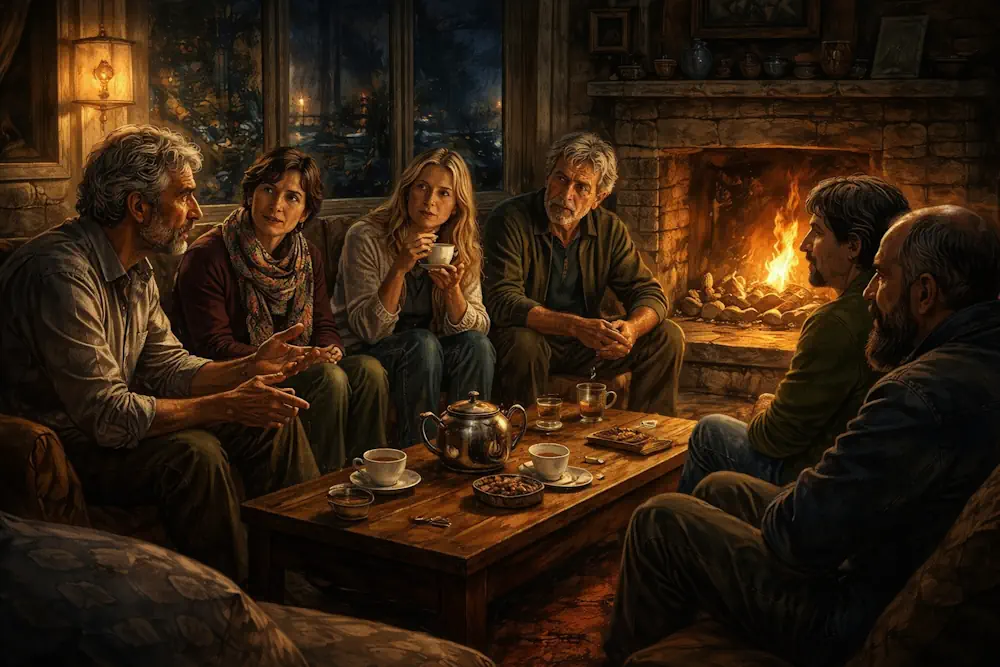
Seven people from different countries gather in a lounge of a writers’ residence, sitting around a table near a fireplace on a cold night. Among them are the narrator and his wife from Iran, an Albanian composer named Ylvi with his family, a Russian writer named Natasha, a French woman named Silvia, and an Iranian painter named Morad. As they drink tea and watch the fire, they begin talking about politics, revolutions, and the troubled histories of their countries.
The conversation gradually reveals the experiences of exile, war, and political repression. Ylvi describes the chaos in Albania after the fall of communism, where armed groups, organized crime, and poverty have led to violence and looting. Natasha responds defensively, explaining that Russia itself has suffered similar corruption and the rise of mafia networks after the collapse of the Soviet system. Their discussion becomes heated, exposing tensions between different national perspectives and memories of political upheaval.
The narrator and his companions reflect on the Iranian Revolution, debating whether revolutions inevitably bring violence and injustice or whether moments of solidarity and hope can still exist. Each participant recalls fragments of their own experiences, revealing how political ideals often collapse into disappointment.
While these arguments continue, the fire in the fireplace grows stronger. The narrator watches the flames and finally remarks, “The Fire of Zoroaster.” For a moment everyone falls silent, staring into the bright, living fire. The image of the fire becomes a quiet symbol of enduring human spirit, suggesting a deeper search for meaning and truth beyond political conflicts and historical turmoil.