
The Dawn —

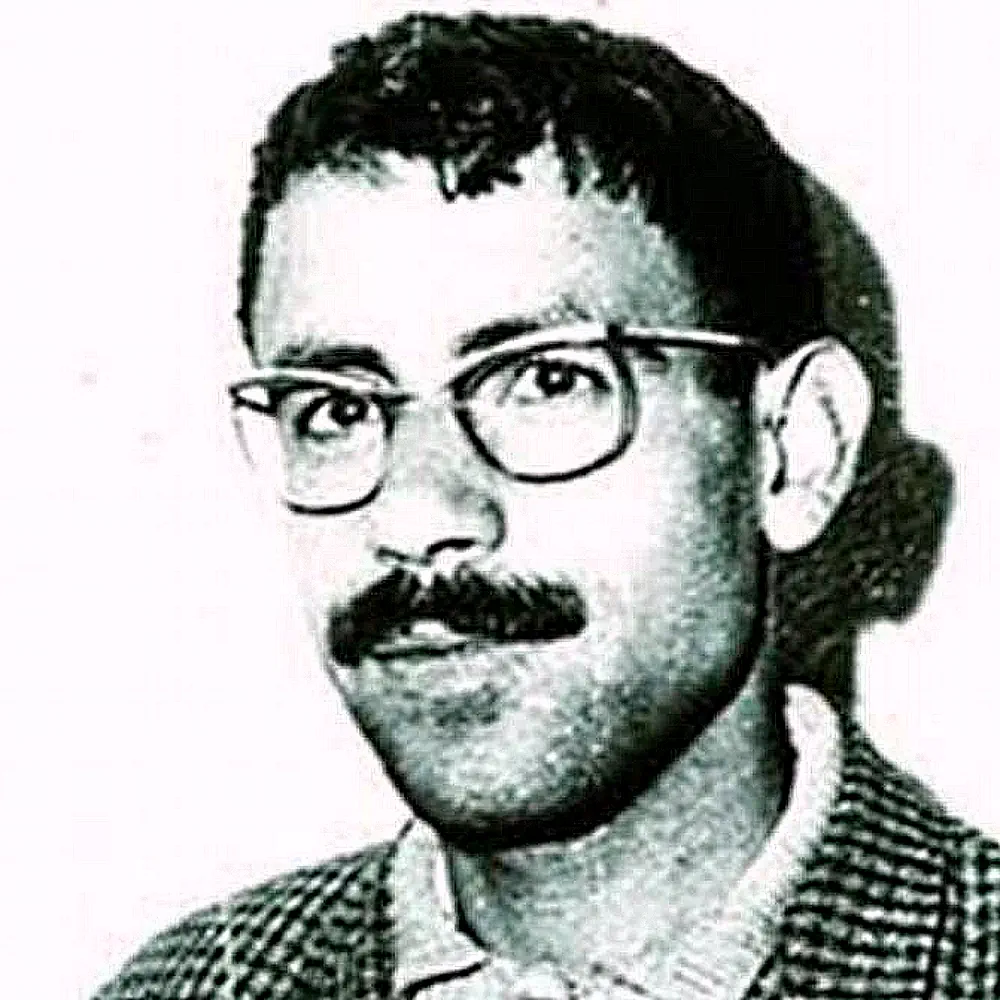
Samad was born on July 2, 1939, in the Charandab district of Tabriz, Iran, into a poor working-class family. His father was a seasonal laborer with limited income who eventually left for the Caucasus in search of work and never returned. Growing up in poverty, Behrangi became familiar with inequality and hardship from an early age, experiences that later shaped his stories.
He completed his primary education and part of high school in Tabriz before entering a teachers’ training college. At the age of eighteen, he became a teacher in rural villages of Azerbaijan and remained in this profession until his early death. During these years, he continued his studies and later earned a degree in English language from the University of Tabriz.
Behrangi later described his growth as that of a tree raised with little water, developing under harsh conditions. This perspective became the foundation of his social worldview.
The Quest —

While teaching in remote villages, Behrangi encountered the harsh realities of rural education and the difficult lives of village children. He realized that official textbooks were disconnected from children’s lives, and teaching Persian to children whose mother tongue was Azerbaijani Turkish created additional barriers. These experiences led him to criticize Iran’s educational system.
Alongside teaching, he began collecting Azerbaijani folklore and local stories. With the help of friends, including Behrouz Dehqani, he gathered and published folk tales. His cultural and social activities expanded, and his critical views brought administrative pressure and political scrutiny. At times, he faced disciplinary actions related to his work.
Behrangi believed children’s literature should not merely offer moral lessons but should also reflect poverty, injustice, and social realities. This belief became central to both his stories and educational writings.
The Manifestation —
Behrangi began writing stories in the early 1960s. His first works were published around 1960, followed by a series of children’s stories with strong social themes.
His most famous work, The Little Black Fish, tells the symbolic story of a small fish that leaves its stream to explore the wider world. The story became a metaphor for courage, freedom, and social change. It later gained wide recognition and was even restricted in Iran before the 1979 revolution.
Other notable works include:
- Ulduz and the Crows
- Ulduz and the Talking Doll
- One Peach, A Thousand Peaches
- Twenty-Four Hours in Sleep and Wakefulness
- Talkhoon
- The Beet Seller Boy
Behrangi also translated poems by Ahmad Shamlu, Forugh Farrokhzad, and Mehdi Akhavan-Sales into Azerbaijani Turkish, and published studies on education and folklore.
The Echo —

In September 1968, Samad Behrangi drowned in the Aras River at the age of twenty-nine. His death quickly became controversial. Some described it as an accident, while others suspected political involvement by security forces of the Pahlavi government. The matter was never conclusively resolved.
His companion, Hamzeh Farahati, later stated that the drowning was accidental. Nevertheless, Behrangi’s early death and the political atmosphere of the time transformed him into a symbolic figure of social awareness and intellectual resistance.
After his death, his works gained broader readership. The Little Black Fish became one of the most influential symbolic stories in modern Iranian literature, and Behrangi emerged as an inspiring figure for younger generations.