The Dawn —

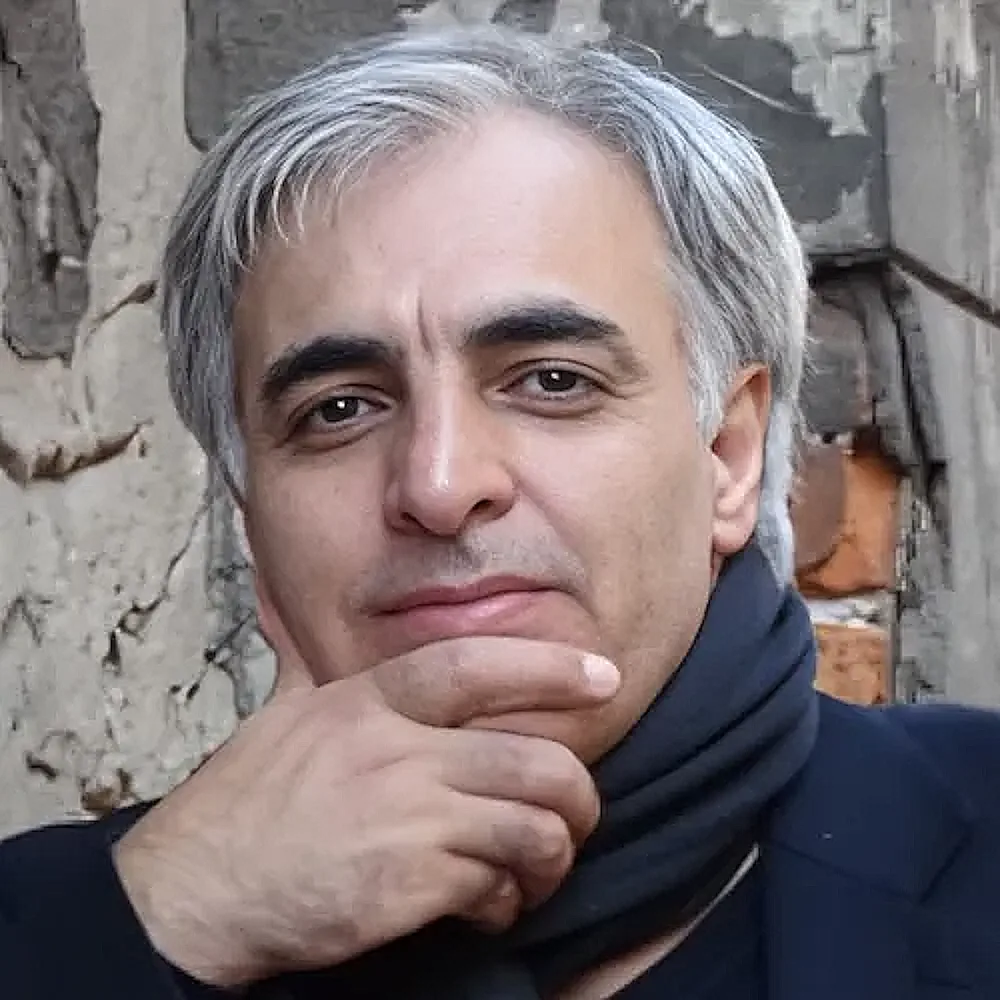
Reza was born on July 1967, in Zanjan. Before he had even learned to read and write, he wanted to become a storyteller. Why he held this dream, and the love he felt for the world of story, still remains a mystery to him. His childhood passed entirely among tales and legends, as though he lived not in this world, but in the realm of myths. He grew up in a family devoted to culture and learning. From adolescence, he immersed himself in the rich library of his home, absorbed first in stories, and later drawn toward classical literature and philosophical texts.
The Quest —

The first sparks of Najafi’s intellectual path were shaped by reading the works of the great figures of world literature and by searching for meaning in ancient texts, gradually leading him toward scholarly criticism and the translation of difficult works. He began his academic journey in Persian Literature before specializing in German Language and Literature due to his deep fascination with German thinkers. Currently residing in Frankfurt, Germany, he serves as an author, critic, and literary instructor. His professional life is marked by teaching literary courses and speaking at numerous national and international seminars. Additionally, he has a significant background in journalism, having published over 350 reviews, articles, and notes in various periodicals.
The Manifestation —

His creative portfolio includes 15 authored books and 15 translations, many of which have seen multiple reprints. In fiction, he is known for collections such as “A Story for the Dead” and “Seven Suspended Steps of the Sleepwalker”. His scholarly work includes “An Introduction to the Contemporary Western Novel,” while his translations feature monumental figures like Friedrich Nietzsche, C.G. Jung, and Hermann Hesse. He also has over ten upcoming works, including a novel and travelogues.
The Echo —

Reza Najafi is recognized as a vital cultural bridge between Iranian and German literature. His innovation in providing scholarly and fair criticism, especially regarding modern Western literature, has significantly influenced contemporary literary discourse. Critics view him as a writer and translator who maintains an intellectual bond between translation, original writing, and journalism, contributing to the richness of the Persian language through his linguistic precision and commitment to the text.