
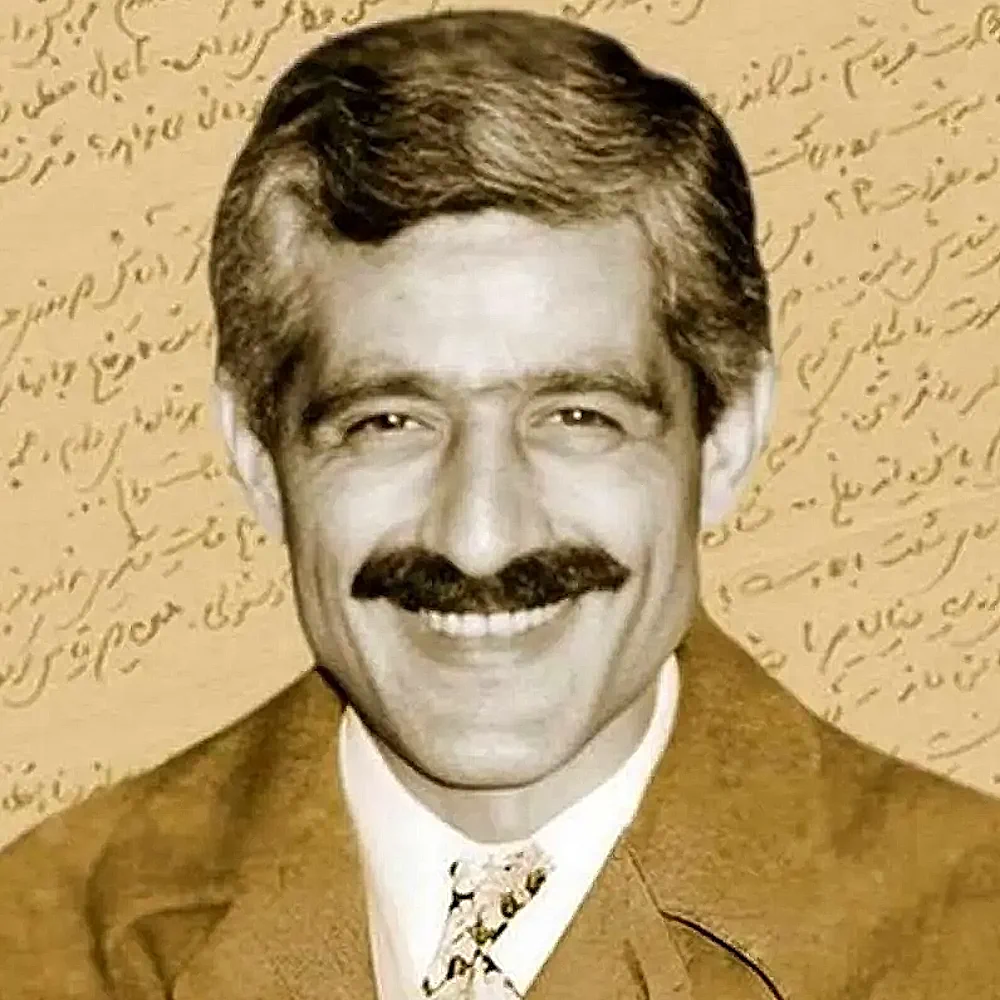
The Dawn —

Jalal was born on December 2, 1923, in the Seyed Nasreddin neighbourhood of Tehran, into a religious clerical family. His father, Sayyed Ahmad Taleghani, was a traditional and strict cleric who expected Jalal to follow the same path. Jalal studied for a time in a religious seminary, but gradually distanced himself from the traditional environment and turned toward modern education. He later continued his studies at Teachers College and graduated in Persian literature.
The political atmosphere of the 1940s, following the fall of Reza Shah, played an important role in shaping his intellectual identity. Jalal initially became involved in political activities and joined the Tudeh Party of Iran. After several years, however, he left the party and began criticizing political and ideological movements. This separation marked the beginning of his intellectual independence.
The Quest —

In 1950, Jalal married Simin Daneshvar. Their marriage became one of the most significant literary partnerships in modern Iranian history. They maintained a close intellectual and literary relationship until Jalal’s death.
During this period, Jalal worked as a teacher while actively participating in cultural life. He also travelled extensively, including visits to Europe, the United States, Israel, and his pilgrimage to Mecca. These journeys later appeared in travel writings such as Khesi dar Miqat and Journey to the Province of Azrael.
During these years, he emerged as one of the most prominent critics of imitative modernity in Iran. His influential book Gharbzadegi (Westoxification), published in the 1960s, had a profound impact on Iranian intellectual life.
The Manifestation —

Jalal Al-e Ahmad wrote across multiple genres: short stories, novels, essays, translations, and travelogues. Among his most important works are:
- The School Principal
- Nun and the Pen
- A Stone on a Grave
- From the Suffering We Endure
- Excessive Woman
- Visits and Reunions
- Khesi dar Miqat
- Westoxification
- On the Service and Betrayal of Intellectuals
He also translated works by Western writers, including André Gide and Albert Camus.
Jalal’s prose developed a distinctive style: brief, compressed, telegraphic, tense, and direct. He often eliminated grammatical elements to create a faster rhythm. This style later influenced a new generation of Iranian writers.
The Echo —

During the 1960s, Jalal Al-e Ahmad became one of Iran’s most influential intellectuals. He created a strong connection between literature and urgent social issues. Writers such as Nader Ebrahimi, Gholamhossein Saedi, and Manouchehr Hezarkhani were influenced by his work.
He died suddenly on September 9, 1969, in Asalem, Gilan. The official cause of death was heart failure, though various speculations about his death have also circulated.
Jalal’s intellectual legacy includes his critique of Westoxification, his call for cultural self-awareness, and his insistence on the social responsibility of intellectuals. His works continue to be widely discussed in Iranian intellectual circles.
The Jalal Al-e Ahmad Literary Award, established in 2008, is one of Iran’s most prestigious literary prizes.
One of his well-known remarks: