
Overview

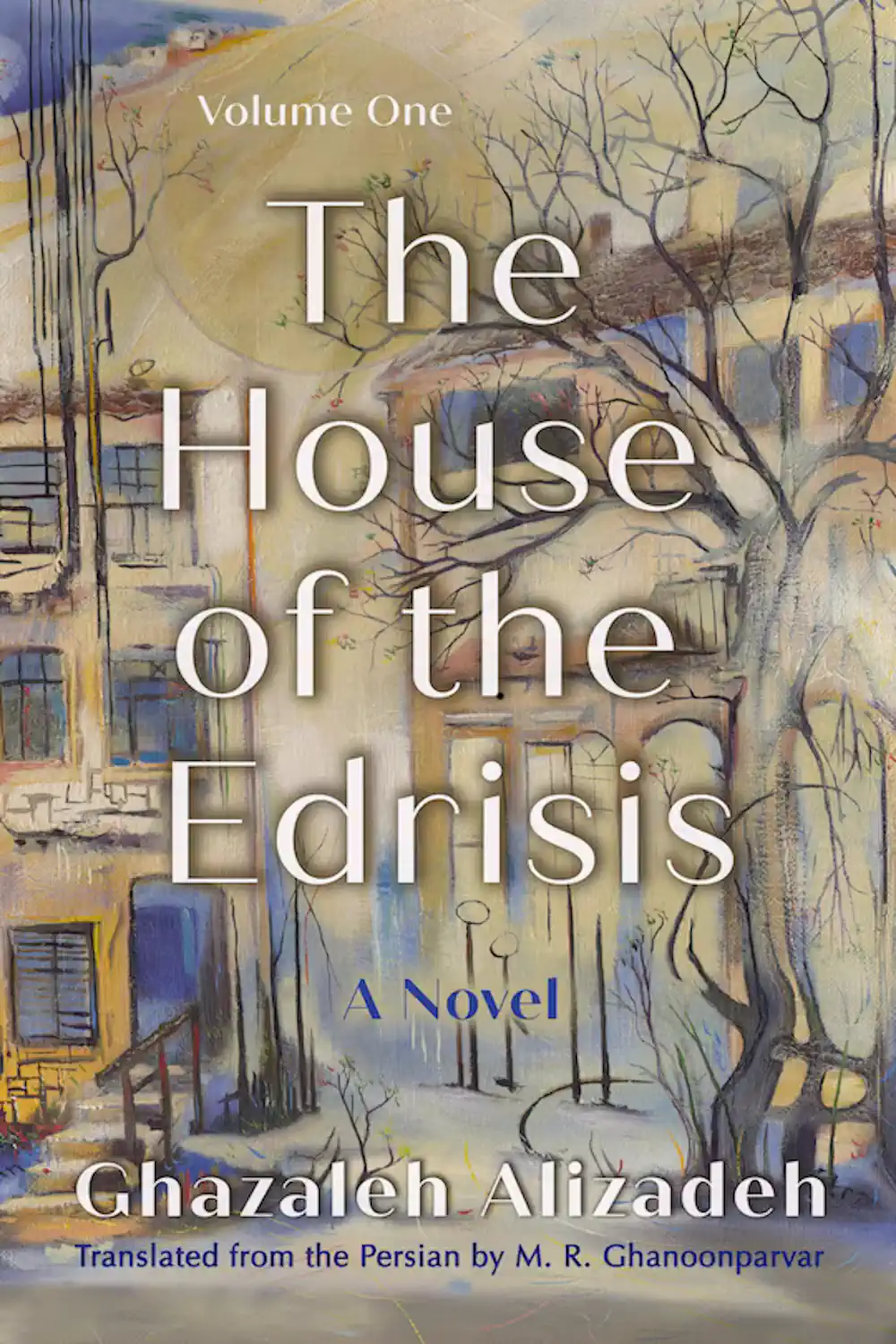
The House of the Edrisis is the most renowned novel by Ghazaleh Alizadeh, published in two volumes in 1991–1992. The story takes place in a fictional city called Eshghabad, within the atmosphere of a social upheaval resembling a revolution.
The novel portrays the gradual decline of an aristocratic family living in a vast, enigmatic house, whose life is disrupted by the arrival of new forces and external change. The narrative moves between reality and dream, offering an image of a world in decay without revealing key plot outcomes.
Analysis

The plot centers on the confrontation between the old Idrisi family and a revolutionary group known as “Ateshkar.” Characters such as Madam Idrisi, Laqa, Vahab, and Yavar each represent aspects of memory, loyalty, and transformation.
The narrative employs a layered perspective and unfolds in a confined, symbolic, and dreamlike setting. The house itself functions as a central symbol of a declining social class.
Alizadeh’s prose is lyrical and richly descriptive. She advances the story slowly, placing greater emphasis on atmosphere and the inner lives of characters than on external action.
Reception

The novel is considered one of the most significant works of contemporary Farsi literature and has received wide attention from critics and readers.
Some critics praise its poetic language and immersive atmosphere, while others argue that its extensive descriptions occasionally slow the narrative.
In 1998, the novel received the Honorary Plaque of Twenty Years of Islamic Revolution Fiction, reinforcing its status as a lasting literary work.