
This short story was originally written in Farsi and consisted of 3,530 words. This condensed English version was prepared by the Scions of Santa House.
“One Night in Casanova’s Life” is an intimate philosophical tale set over the course of a single spring night, where desire, memory, aging, and mortality intertwine. It follows a middle-aged man—cultured, restless, and deeply self-aware—who spends the night with a much younger woman in his apartment. Their relationship is sensual, playful, and intellectually charged, but beneath the erotic surface lies a deeper meditation on life itself.
The story opens in a dimly lit bedroom after lovemaking. The man wakes during the night and watches the young woman sleeping beside him. Her slender body and short hair make her seem almost like a child to him, and his thoughts drift to ancient Greek ideals of beauty, where young men and women were often compared in their delicacy. Desire stirs in him again, and he gently begins touching her. Though half-asleep and protesting weakly, she gradually surrenders, and another long act of intimacy begins.
Afterward, lying together in bed, they talk. The woman teases him for exhausting her with three rounds of sex in a single day, joking that, according to his own theory, she has already walked thirty-two kilometres’ worth of energy. Their playful exchange turns into a long philosophical conversation that reveals the man’s worldview.
He speaks of sex not as mere pleasure, but as one of the deepest expressions of life itself. He references poets, Freud, Picasso, Schopenhauer, Jung, Buddha, and Casanova, moving easily between erotic humour and existential reflection. For him, libido is not vulgar appetite, but the vital force of existence—the same creative energy that drives art, thought, and survival. He defends hedonism against moral judgment, arguing that many great men condemned as womanizers were more honest about human nature.
The woman challenges him constantly. She accuses him of romanticizing lust and hiding selfishness behind philosophy. She points out the contradictions in his thinking: if sex is merely instinct, why all this theorizing? Why invoke Schopenhauer, who saw desire as suffering, while claiming the identity of Don Juan? She also mocks his tendency to become philosophical only after sex, when action has ended, and words begin.
The man admits that perhaps she is right, but insists that erotic desire is more than biology. Woman, to him, is nature itself—the gateway to life and the one moment in which human beings forget death. During orgasm, he says, man is no longer alone. For him, intimacy is not only pleasure but resistance against mortality.
Their argument turns to aging. He wonders whether the loss of sexual power in old age brings wisdom or crisis. He suspects that for someone like him, it would mean crisis first. He recalls how Picasso, after losing sexual ability late in life, became obsessed with erotic painting. He fears a similar fate: that desire will remain after the body fails.
The woman offers a harsher truth: Don Juans, she says, become the loneliest people in old age. In trying to possess everyone, they lose everyone. Her words strike deeper than she knows.
Later, unable to sleep, the man leaves the bedroom and walks into the dark living room. He opens the window and feels the cool spring air against his skin. Moonlight fills the room. This quiet moment awakens an old memory from his youth: a night decades earlier, when, still married, he lay beside his eighteen-year-old lover while his wife was away travelling. That night had been filled with the same moonlight, the scent of orange blossoms, the thrill of forbidden pleasure, and the fear of being caught.
Looking back, he realizes that his affairs were never only about lust. Something deeper drove him—something rooted in his nature, something unavoidable. Like a bird cannot refuse flight, he feels he could not refuse desire. He reflects that Don Juans may be the most innocent of men because they are not hypocrites; they simply obey what is already written in their blood. Their real mistake, he thinks, is marriage. Some people are simply not made for domestic permanence.
Yet memory betrays him. He cannot recall the details of that old night of passion. This troubles him deeply. For a seducer, forgetting love scenes feels worse than death. If memory disappears, it is as if those moments never existed.
He sits on the sofa, lights a cigar, and watches an Italian music channel showing Mediterranean villages, candlelit restaurants, lovers drinking wine by the sea, and colourful spring flowers. Romantic Italian music fills the room. He whispers phrases like “La Dolce Vita” and “Carpe Diem,” feeling an almost mystical peace.
Suddenly, he experiences something rare: complete inner stillness. For perhaps the first time in decades, his anxiety disappears. His mind, always turbulent like a stormy sea, becomes calm and transparent. It feels like enlightenment, like nirvana. He realizes that such peace is possible and desperately wishes to hold onto it forever.
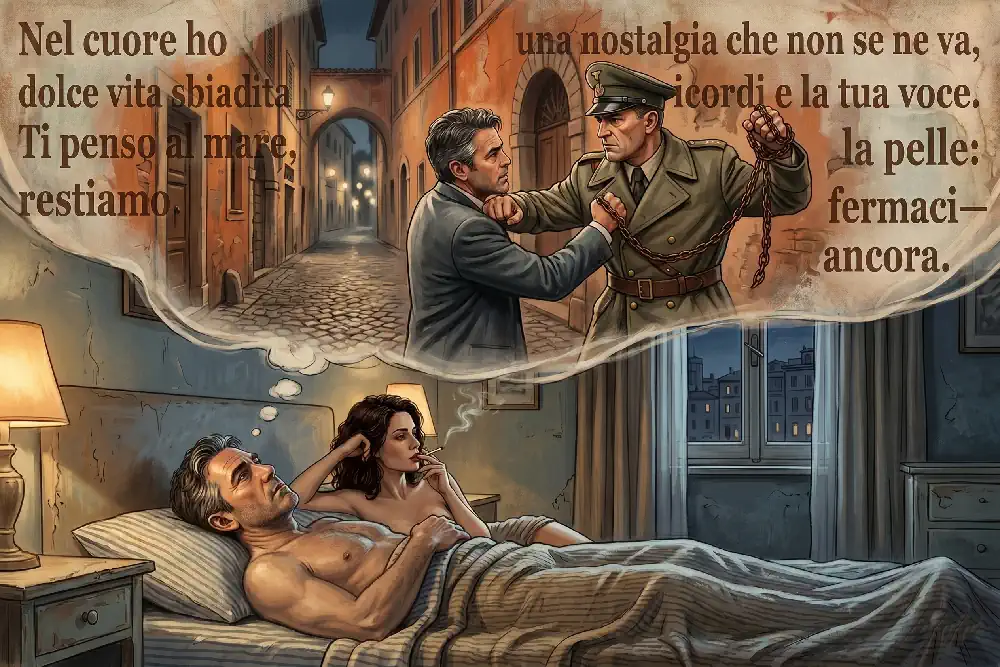
He falls asleep on the sofa and enters a dream. In it, he is naked in his ex-wife’s apartment, caught again in infidelity. His phone rings—his wife is coming home. Panicked, he jumps out the window and finds himself naked in the street, wearing only a strange police vest. A military officer appears and stops him. The officer threatens him with two choices: prison or forced enlistment in a legion bound for distant islands.
When he protests absurdly that he is “a free Englishman named Smith,” the officer attacks him with a hooked chain, striking his skull and dragging him away like prey.
He wakes in terror, heart pounding. The dream feels painfully real. He recalls that ancient Romans used hooked whips before crucifixion, tearing flesh from bone. The nightmare seems like punishment—a violent return of guilt after his moment of peace and pleasure.
Shaken, he returns to bed beside the sleeping woman. Still trembling, he slips under the blanket, wraps his arms around her body, and presses himself against her warmth. He kisses the back of her neck and lets his tongue move softly against her ear.
The story closes there: not with resolution, but with the eternal return of desire, fear, and the need for human closeness—one more night in the endless life of a modern Casanova.
The story opens in a dimly lit bedroom after lovemaking. The man wakes during the night and watches the young woman sleeping beside him. Her slender body and short hair make her seem almost like a child to him, and his thoughts drift to ancient Greek ideals of beauty, where young men and women were often compared in their delicacy. Desire stirs in him again, and he gently begins touching her. Though half-asleep and protesting weakly, she gradually surrenders, and another long act of intimacy begins.
Afterward, lying together in bed, they talk. The woman teases him for exhausting her with three rounds of sex in a single day, joking that, according to his own theory, she has already walked thirty-two kilometres’ worth of energy. Their playful exchange turns into a long philosophical conversation that reveals the man’s worldview.
He speaks of sex not as mere pleasure, but as one of the deepest expressions of life itself. He references poets, Freud, Picasso, Schopenhauer, Jung, Buddha, and Casanova, moving easily between erotic humour and existential reflection. For him, libido is not vulgar appetite, but the vital force of existence—the same creative energy that drives art, thought, and survival. He defends hedonism against moral judgment, arguing that many great men condemned as womanizers were more honest about human nature.
The woman challenges him constantly. She accuses him of romanticizing lust and hiding selfishness behind philosophy. She points out the contradictions in his thinking: if sex is merely instinct, why all this theorizing? Why invoke Schopenhauer, who saw desire as suffering, while claiming the identity of Don Juan? She also mocks his tendency to become philosophical only after sex, when action has ended, and words begin.
The man admits that perhaps she is right, but insists that erotic desire is more than biology. Woman, to him, is nature itself—the gateway to life and the one moment in which human beings forget death. During orgasm, he says, man is no longer alone. For him, intimacy is not only pleasure but resistance against mortality.
Their argument turns to aging. He wonders whether the loss of sexual power in old age brings wisdom or crisis. He suspects that for someone like him, it would mean crisis first. He recalls how Picasso, after losing sexual ability late in life, became obsessed with erotic painting. He fears a similar fate: that desire will remain after the body fails.
The woman offers a harsher truth: Don Juans, she says, become the loneliest people in old age. In trying to possess everyone, they lose everyone. Her words strike deeper than she knows.
Later, unable to sleep, the man leaves the bedroom and walks into the dark living room. He opens the window and feels the cool spring air against his skin. Moonlight fills the room. This quiet moment awakens an old memory from his youth: a night decades earlier, when, still married, he lay beside his eighteen-year-old lover while his wife was away travelling. That night had been filled with the same moonlight, the scent of orange blossoms, the thrill of forbidden pleasure, and the fear of being caught.
Looking back, he realizes that his affairs were never only about lust. Something deeper drove him—something rooted in his nature, something unavoidable. Like a bird cannot refuse flight, he feels he could not refuse desire. He reflects that Don Juans may be the most innocent of men because they are not hypocrites; they simply obey what is already written in their blood. Their real mistake, he thinks, is marriage. Some people are simply not made for domestic permanence.
Yet memory betrays him. He cannot recall the details of that old night of passion. This troubles him deeply. For a seducer, forgetting love scenes feels worse than death. If memory disappears, it is as if those moments never existed.
He sits on the sofa, lights a cigar, and watches an Italian music channel showing Mediterranean villages, candlelit restaurants, lovers drinking wine by the sea, and colourful spring flowers. Romantic Italian music fills the room. He whispers phrases like “La Dolce Vita” and “Carpe Diem,” feeling an almost mystical peace.
Suddenly, he experiences something rare: complete inner stillness. For perhaps the first time in decades, his anxiety disappears. His mind, always turbulent like a stormy sea, becomes calm and transparent. It feels like enlightenment, like nirvana. He realizes that such peace is possible and desperately wishes to hold onto it forever.
He falls asleep on the sofa and enters a dream. In it, he is naked in his ex-wife’s apartment, caught again in infidelity. His phone rings—his wife is coming home. Panicked, he jumps out the window and finds himself naked in the street, wearing only a strange police vest. A military officer appears and stops him. The officer threatens him with two choices: prison or forced enlistment in a legion bound for distant islands.
When he protests absurdly that he is “a free Englishman named Smith,” the officer attacks him with a hooked chain, striking his skull and dragging him away like prey.
He wakes in terror, heart pounding. The dream feels painfully real. He recalls that ancient Romans used hooked whips before crucifixion, tearing flesh from bone. The nightmare seems like punishment—a violent return of guilt after his moment of peace and pleasure.
Shaken, he returns to bed beside the sleeping woman. Still trembling, he slips under the blanket, wraps his arms around her body, and presses himself against her warmth. He kisses the back of her neck and lets his tongue move softly against her ear.
The story closes there: not with resolution, but with the eternal return of desire, fear, and the need for human closeness—one more night in the endless life of a modern Casanova.