
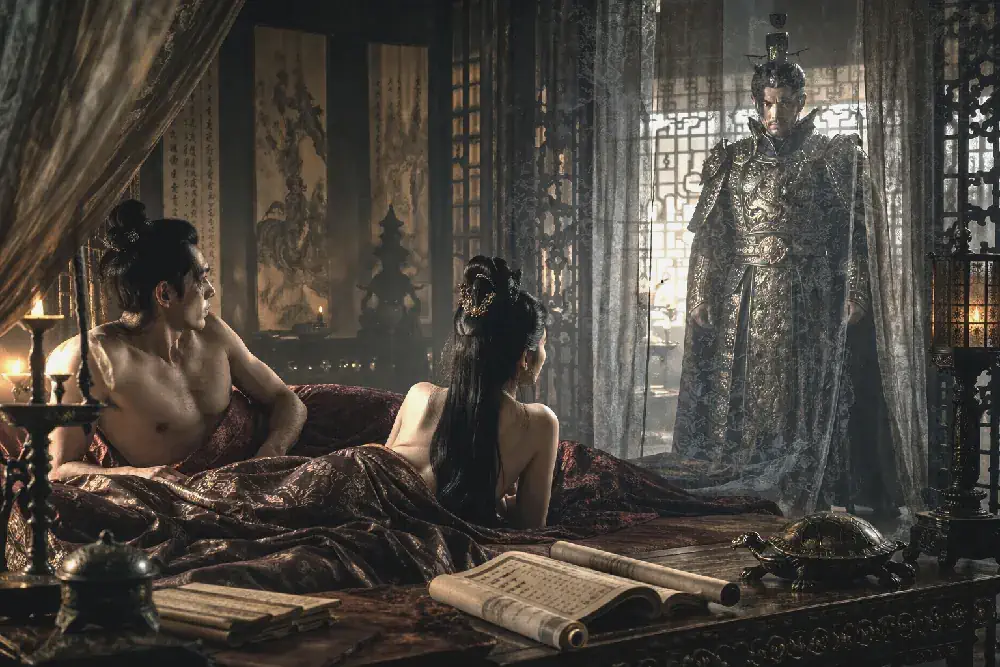
The Seventh Nightmare is a haunting historical and philosophical narrative told through the eyes of Sumachin, the Grand Scribe and master historian of the Han imperial court. More than a story of forbidden love, it is a sophisticated exploration of the power struggle between the Pen and the Sword, between the creator of history and the creator of terror.
The tale begins at the peak of a crisis: Sumachin and Nayva, the Emperor’s favorite consort, are discovered in bed by the mad Emperor Wu. In a brilliant meta-fictional turn, the narrator “freezes” time at the moment of discovery, asserting that even a powerful emperor must wait while the writer tells his story. Sumachin reveals that his life has been haunted by six recurring nightmares, but this discovery—the betrayal of a tyrant who is both a mad scientist of torture and a rival in love—marks the beginning of the Seventh, and final, Nightmare.
Emperor Wu, who views suffering as a meticulous art form, devises a punishment of poetic cruelty. Sumachin is not merely executed; he is entombed in a specially engineered, airtight steel coffin submerged deep beneath the silent waters of an artificial lake. The Emperor ensures that the moment of Sumachin’s suffocation coincides exactly with the moment he reclaims Nayva’s body—a final, sadistic triumph over his rival’s soul.
As the oxygen fades, the narrative shifts into a chilling meditation on absolute solitude and the endurance of human consciousness. Even in the crushing darkness and the “tomb of silence,” the writer’s memory survives. The story concludes with a powerful irony: while the Emperor’s dynasty eventually falls to the “Yellow Turban Rebellion” and his body is torn apart by insurgents, the voice of the buried scribe outlives the empire, proving that a story, once written, cannot be silenced by steel or water.
Blending historical grandeur with nightmare-like intensity, “The Seventh Nightmare” is a profound commentary on the terrifying creativity of vengeance and the eternal resilience of the word against the fleeting brutality of tyranny.