The Dawn —

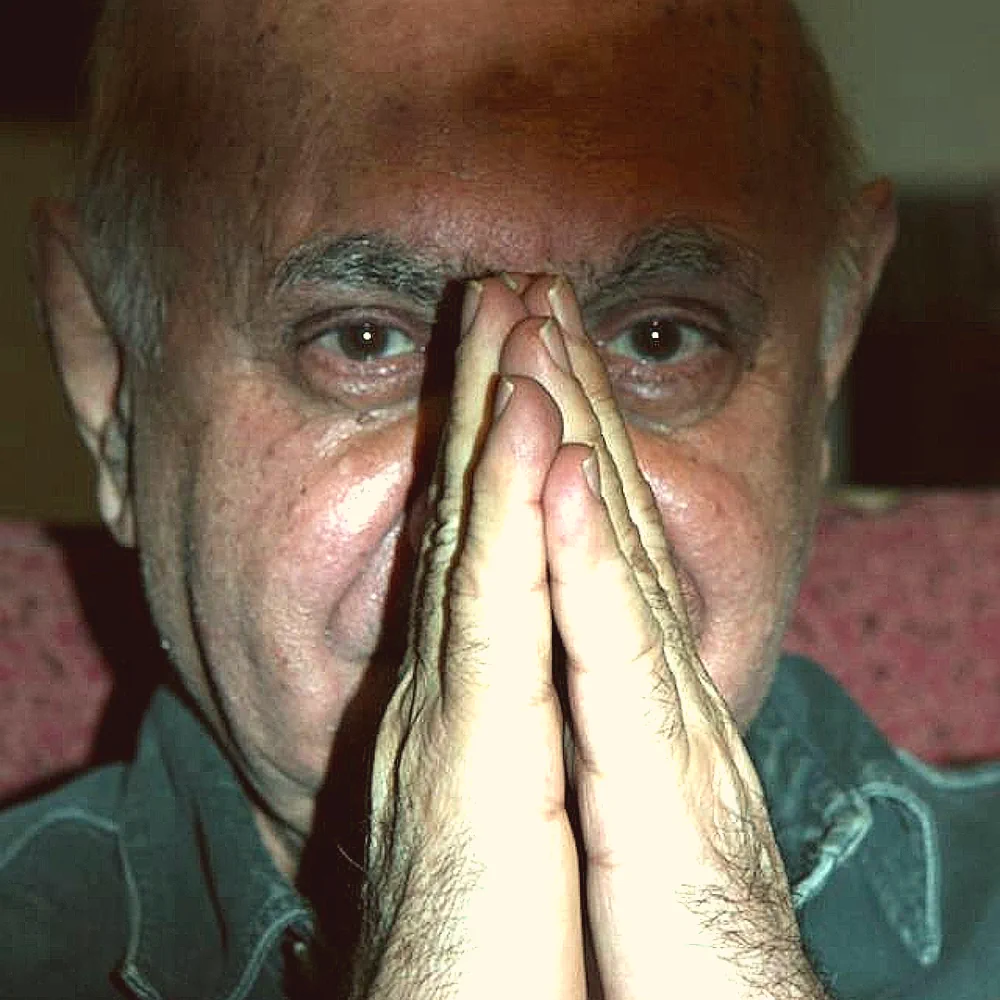
Jamal (Hossein) was born on May 9, 1933, in Tehran. His interest in books began in childhood when he read the popular tale Amir Arsalan Namdar. As a boy, he saved money to rent books so that he could remain connected to the world of stories. During his youth, he discovered a growing ability and inclination toward writing. Together with his friend Bijan Mofidi, later the creator of the famous play Shahr-e Ghesseh, he made a pact to write something each week and read and critique one another’s work.
Mirsadeghi later studied Farsi Language and Literature at the University of Tehran and developed a serious interest in fiction writing. His early years were marked by financial hardship; at one point he even worked as a labourer to support himself. These lived experiences later shaped the social awareness and realism that appear in many of his stories.
The Quest —

Mirsadeghi’s early recognition came when his story “Snow, Dogs, Crows” was published in the literary magazine Sokhan. This publication led to his acquaintance with Parviz Natel Khanlari, the editor of the magazine, who later invited him to join its editorial board. Through this collaboration he became acquainted with several literary figures, including Naser Pakdaman, Ahmad Tafazzoli, Reza Seyed-Hosseini, Sirus Parham, Mohammad-Jafar Mahjoub, and Bahram Sadeghi.
Despite these connections, Mirsadeghi was rarely present in literary gatherings or cultural circles and preferred to concentrate on writing and research. Some prominent writers, including Jalal Al-e Ahmad and Ebrahim Golestan, were among his sharp critics. Alongside his literary activities, he held a variety of jobs: labourer, schoolteacher, librarian at a teacher-training college, test-development specialist at the Organization of Administrative and Employment Affairs of Iran, archivist responsible for historical documents at the National Archives of Iran, and later a university lecturer in literature and fiction writing. These diverse experiences broadened his social perspective.
The Manifestation —
Mirsadeghi wrote numerous short stories and ten novels and became one of the prominent teachers of fiction writing in Iran. He began teaching fiction at the suggestion of Mohammad-Reza Shafiei Kadkani. Although he initially hesitated to accept the responsibility, his classes soon became influential. They began at the University of Tehran and later continued at institutions such as the Niavaran Cultural Center, Azad University, and the IRIB University, eventually extending to workshops held in his own home. Among the writers who emerged from these classes are Moniro Ravanipour and Fariba Vafi.
His fiction often reflects everyday life, human relationships, and social change. At the same time, through analytical study of narrative techniques and storytelling structure, he helped clarify and systematize the theory of fiction writing in Farsi.
Jamal Mirsadeghi is married to Meymanat Zolghadr (Mirsadeghi). She is also a poet and writer and has collaborated with him on several works, including Dictionary of the Art of Fiction Writing. They have two children, Mani and Nazanin.
The Echo —

In addition to his creative works, Mirsadeghi authored several influential books on the craft of fiction, which have long been used in literary courses and writing workshops. Among his notable works are Adabiyat-e Dastani (Narrative Literature), first published as Qesseh, Short Story, Novel (1979), Qesseh, Short Story, Novel: A Study of Narrative Literature (1981), Elements of Story (1985), Story and Literature (1991), Dictionary of the Art of Fiction Writing (with Meymanat Mirsadeghi, 1998), Guide to Novel Writing (2010), and Point of View in Fiction (2012).
Other works include Sweat of the Soul, a collection of reflections and practical lessons for young writers, and Third Generation Women Story Writers, a volume presenting sixty-five stories by women writers along with his commentary and analysis.
His short stories and novels have been translated into several languages, including German, English, Armenian, Italian, Russian, Romanian, Hebrew, Arabic, Hungarian, Hindi, Urdu, and Chinese. A documentary film titled The Lights, directed by Ali Zare Qanat-Navi, was also made about his life and literary work.
Through both his fiction and his teaching, Mirsadeghi has left a lasting influence on modern Persian narrative literature.