Overview
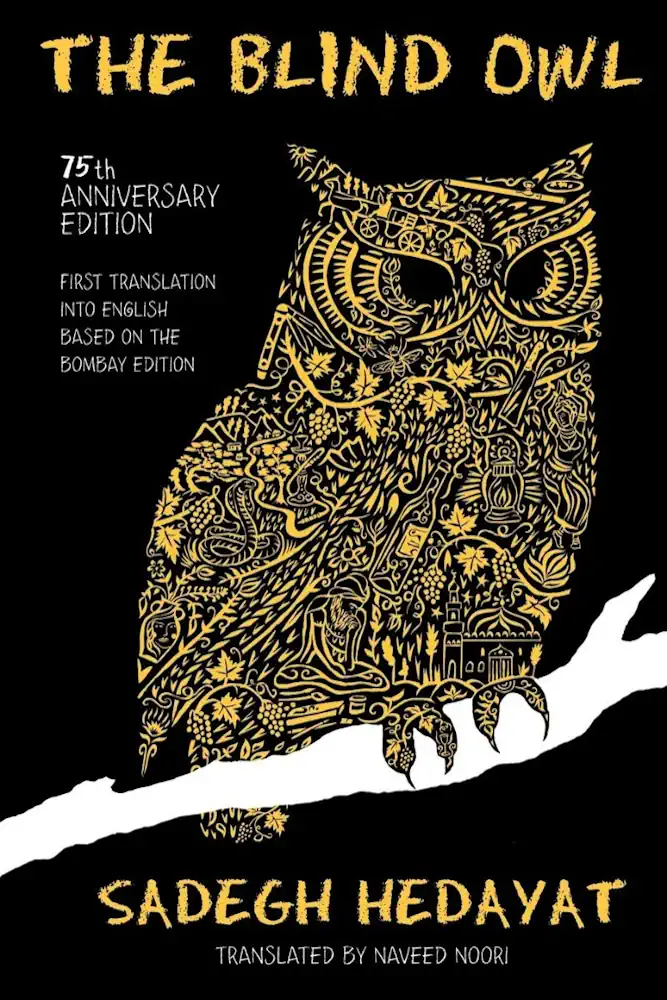
 “The Blind Owl” by Sadegh Hedayat, written in 1937, is widely regarded as one of the masterpieces of modern Persian literature. The story opens with the voice of a sick and isolated narrator who lives in a dark room and writes his confessions for a shadow cast on the wall. He feels detached from society and incapable of communicating with ordinary people. The narrative begins when he witnesses a mysterious scene: an ethereal young woman sitting beside a hunched old man. The image becomes an obsessive vision that haunts him. Later, the same woman appears in his house, silent and distant. She eventually dies, and the narrator dismembers her body before attempting to bury it, while a strange old man repeatedly reappears during the process. In the second half of the novella, the same figures return in a more realistic form: the ethereal woman becomes an unfaithful and contemptuous wife, and the hunched old man appears in different guises such as a butcher, an uncle, or a junk dealer. Throughout the narrative the boundary between dream and reality collapses, turning the story into a psychological nightmare.
Analysis
 The structure of “The Blind Owl” is built on an unreliable and deeply subjective narration. The novella consists of two major sections that seem separated by time but are symbolically connected through recurring images and characters. The atmosphere is filled with motifs of death and decay, including shadows, graves, blood, and opium. Hedayat constructs a circular narrative in which images and words repeat with shifting meanings, reflecting the disturbed mind of the narrator. Most characters remain unnamed, and at times they appear to be fragmented projections of the narrator himself. Major themes include alienation, existential anxiety, obsession, sexuality, and the fear of death. The central female figure appears in two contrasting forms: an unattainable, sacred being and a corrupted earthly woman. These two images merge in the narrator’s mind, intensifying his psychological collapse. The nonlinear structure, surreal imagery, and poetic language are among the defining stylistic features of the work.
Reception
 Since its publication, “The Blind Owl” has been widely recognized as Sadegh Hedayat’s masterpiece and a landmark of modern Persian fiction. The novella has been translated into numerous languages and has attracted extensive academic and critical attention. Many critics interpret the work as a symbolic and multilayered narrative open to philosophical, psychological, and social readings. Some scholars connect its dark and melancholic tone to the author’s personal struggles, while others view it as a reflection of the cultural and political atmosphere of early twentieth-century Iran. Jalal Al-e Ahmad described the novel as a product of censorship and silence during that era. Over time, “The Blind Owl” has remained a controversial yet highly influential work that helped shape the development of the modern Persian novel.