The Dawn —

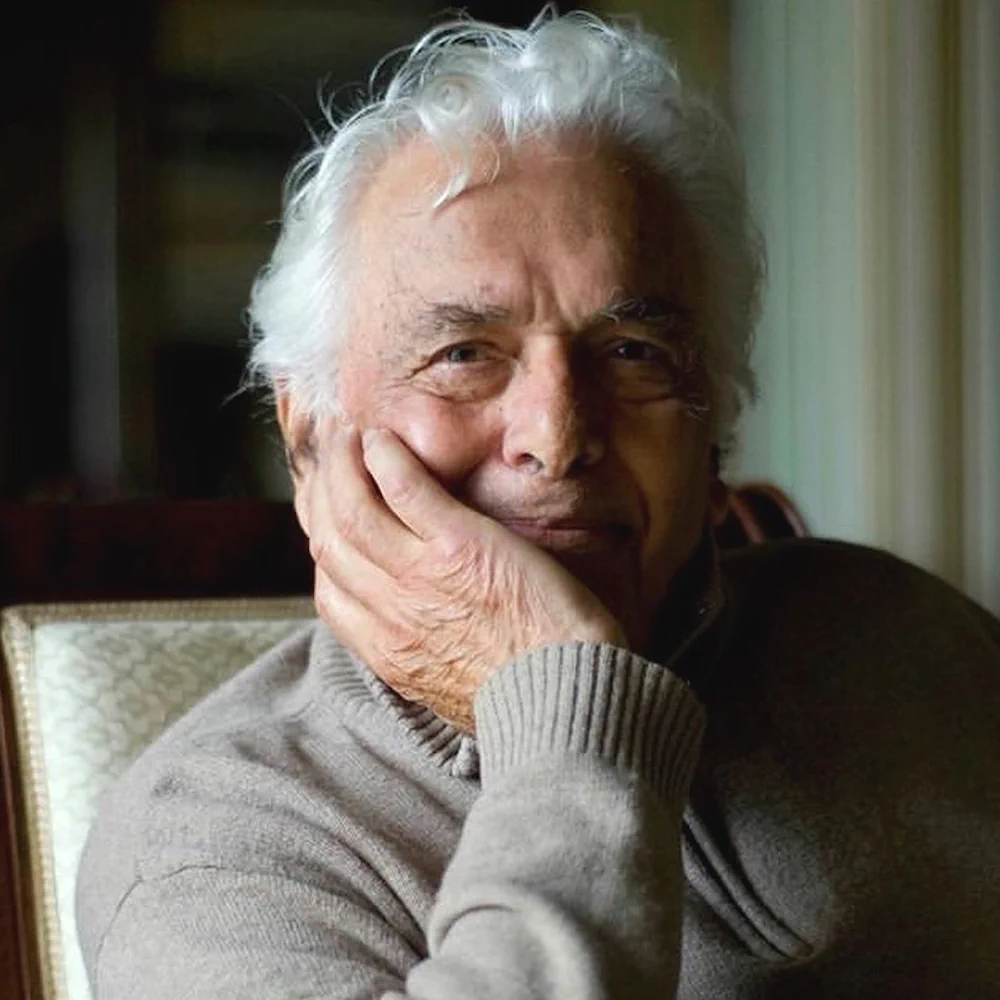
Ibrahim was born on October 18, 1922, under the name Seyyed Ebrahim, into the influential and culturally rich Taqavi Shirazi family in Shiraz. His father, Seyyed Mohammad-Taqi, was a journalist and owner of the newspaper Golestan, and played a role in the political and intellectual climate of Iran at the time. His grandfather was also among the city’s prominent clergy. Growing up in a traditional, political, and cultural household, Ibrahim’s mind was drawn to thought and his tongue to speech from the very beginning.
Ebrahim Golestan completed his education in Shiraz and from adolescence showed a keen interest in literature, language, and translation. It is said that before his teenage years he had already become acquainted with Arabic and French. In the early 1940s he moved to Tehran and enrolled in the Faculty of Law at the University of Tehran, but left his studies unfinished. The turbulent political and social atmosphere of the era drew his attention away from academic life and toward more practical experiences in literature and politics.
In his youth he joined the Tudeh Party, but after a time distanced himself from the party environment. This brief yet profound political experience shaped his critical perspective on power, society, and the individual — a perspective that would later manifest in his stories and films. His first short story collection, Those Who Went to Steal, was published in the 1940s, and his subsequent book Azar, the Last Month of Autumn cemented his place in modern Persian literature.
The Quest —

In the late 1940s, Golestan went to Abadan and took up work at the Anglo-Iranian Oil Company. This period was one of the most formative of his life. During these years he devoted himself to translation, writing, and cultural production, and came to know the modern world and the oil industry up close. The experience of living in southern Iran lent clarity and force to his realist and social outlook.
In 1957, Golestan founded Golestan Film studio, which became one of Iran’s most important documentary film production centers. During this period he made documentaries about the oil industry, the lives of workers, and the social transformations of Iran.
It was in this studio that his acquaintance with Forough Farrokhzad began. Forough, a celebrated poet, entered Golestan’s cinematic world. Their collaboration deepened into a profound artistic and emotional relationship. Golestan taught Forough filmmaking and editing, while Forough in turn influenced the poetic sensibility of Golestan’s cinema. Their collaboration on the film The House Is Black resulted in one of the most important documentary works in the history of Iranian cinema.
This romantic relationship became one of the most controversial aspects of Golestan’s life. Since Golestan had a wife and children, his emotional bond with Forough had stirred considerable scandal. When that poet-woman died suddenly in 1967, both Golestan’s inner and outer life fell into turmoil. It was after this that Ebrahim sought refuge in isolation and silence.
The Manifestation —

In Persian literature, Golestan introduced a prose style that was concise, musical, and unlike anything before it. Collections such as Hunting Shadow, The Stream, the Wall, and the Thirsty, and Tide and Mist stand among his major works. His prose blended poetry, imagery, and narrative, and played a significant role in the formation of modern Persian fiction.
In cinema as well, Golestan is considered a pioneer of the Iranian New Wave. Brick and Mirror was one of the first modern films in Iranian cinema. The Secrets of the Treasure of the Jinn Valley is regarded as an allegorical and critical work about Iranian society.
The documentary A Fire won the Venice Film Festival award in 1961 and was Iran’s first international cinematic success. The documentary The Hills of Marlik is also counted among his important works.
His books include:
- Azar, the Last Month of Autumn — short stories (1948)
- Hunting Shadow — short stories (1955)
- The Stream, the Wall, and the Thirsty — short stories (1967)
- Tide and Mist — short stories (1969)
- The Secrets of the Treasure of the Jinn Valley — novella (1974)
- The Rooster — novella (1995)
- A Tale of Days Gone By — novella (2004)
- In the Passage of Time — short stories (2016)
- Mokhtar in His Time — story (2022)
The Echo —

Golestan left Iran in the 1970s and settled in England, living in Sussex for more than half a century. In these years he made fewer films, but continued to be present through interviews and writings.
Golestan was a figure of frank, independent, and at times provocative character. He spoke about literature, cinema, and politics with a critical eye. His conversations in the final years of his life drew wide attention.
He passed away on August 22, 2023, at the age of 101, in England.