
The Dawn —

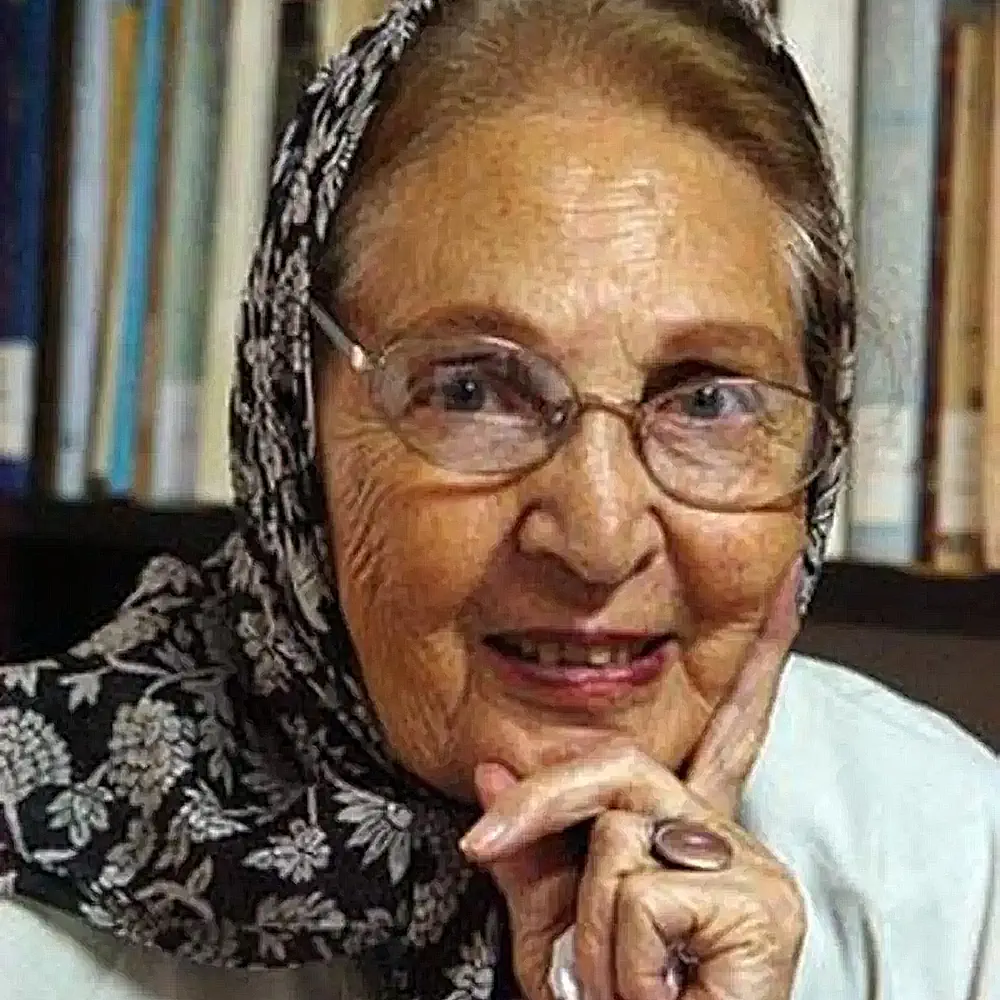
Samineh was born in Tabriz into a cultured and forward-looking family. Her father, Jabar Baghcheban, was a pioneer of deaf education in Iran, and the atmosphere of their home was closely tied to learning, literature, and attention to children. This environment familiarized her mind with language, tale and story, and education from an early age.
She later pursued her studies in Tehran and became acquainted with literature and modern educational methods at the Teachers’ Training College and other academic institutions of the time. Step by step, she entered the story of her own life with awareness and purpose. These experiences led her to view children’s education not merely as the transfer of knowledge, but as a process in which learning through tale and story, poetry, and narrative could nurture imagination and deepen a child’s understanding of the world.
The Quest —

Baghcheban began her work at a time when the education of deaf children and the field of children’s literature in Iran had not yet taken a coherent shape. Alongside her educational activities, she sought ways to turn language and story into instruments of learning.
Working with deaf children guided her toward approaches in which image, tale, and story played a central role. She believed that tales and stories could build a bridge between a child’s lived experience and the wider world of knowledge. In this path, she collaborated with educational institutions, writers, and cultural programs, striving to elevate children’s literature—supported by tale and story—from mere entertainment to an educational and formative tool.
The Manifestation —

The outcome of these efforts was a body of work in the fields of children’s literature and education. By writing stories and educational texts for children, particularly for deaf children, she demonstrated that narrative could play a fundamental role in language learning and in understanding the world.
Her works and activities helped expand a new perspective in education, one in which tale, story, and poetry became part of the teaching method itself. This approach later influenced the development of modern children’s literature in Iran and strengthened attention to the child’s imagination, inspiring many teachers and writers.
The Echo —

Samineh Baghcheban remained active in education and literature until the later years of her life and came to be recognized as one of the influential figures in the education of deaf children and in children’s literature. In the final years of her life, even while living outside Iran, she continued her cultural activities and shared her experiences in teaching language and literature.
Her influence also reached educational institutions abroad. The Samineh Baghchehban Scholarship, established at the Clarke School for the Deaf in Northampton, Massachusetts, was created in her honour to support students from the Middle East who pursue studies in deaf education. Named after the Iranian educator, author, and pioneer in this field, the fellowship reflects more than six decades of her dedication to teaching and teacher training. Her international academic path had begun earlier when she received a Fulbright scholarship and earned her Master’s degree from Smith College in 1953, strengthening the educational vision that later shaped her work.
Her passing marked the end of a fruitful life, yet her intellectual legacy endured: the bond between education and story. Her work showed that narrative and literature can open paths for understanding the world, cultivating imagination, and making learning accessible to all children, including those deprived of hearing.